
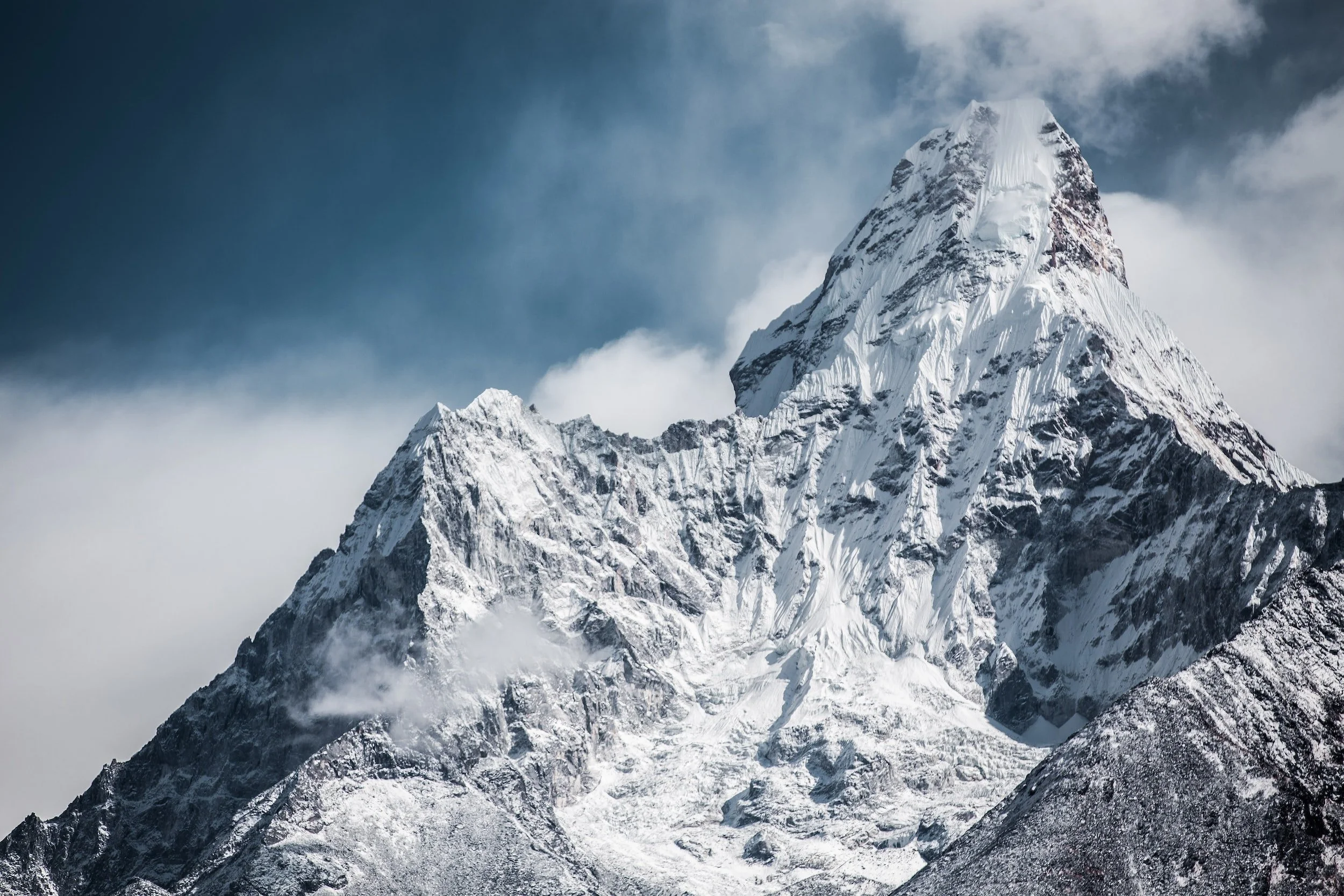
Ama Dablam Expedition
A 28-day technical expedition to Ama Dablam (6,812m), the 'Matterhorn of the Himalayas,' combining rock, ice, and mixed climbing on the Southwest Ridge with rich Sherpa cultural immersion.
- Duration 28 Days
- Difficulty Strenuous
- Group Size 8 People
- Max Altitude 6812m
- Region Everest
Overview
Ama Dablam (6,812m) is a technical high-altitude climb in the Everest (Khumbu) region, widely regarded as the 'Matterhorn of the Himalayas' for its exposed, sharply pointed summit. Despite standing under 7,000m, it is considered one of the most technically demanding peaks in Nepal, testing technical skill, judgment, and composure at altitude in equal measure. It was first climbed in 1961 by Mike Gill, Barry Bishop, Mike Ward, and Wally Romanes.
The standard Southwest Ridge route combines steep rock climbing, ice climbing, mixed sections, fixed-rope ascents, and knife-edge ridges. Climbers pass through Sherpa settlements including Namche, Tengboche, and Pangboche en route to Base Camp, then move through three high camps — negotiating the Yellow Tower, the Mushroom Ridge, and a treacherous crossing beneath a hanging glacier — before a long, exposed summit push.
Ama Dablam sees far fewer climbers than Everest or Annapurna, earning it a reputation as a 'hidden gem' offering solitude alongside serious technical challenge. It's often treated as a benchmark climb — a proving ground that separates intermediate climbers from advanced Himalayan mountaineers, and a common stepping stone toward 7,000–8,000m objectives.
Itinerary
-
Day 1 Arrival in Kathmandu
Arrive at Tribhuvan International Airport and transfer to a 5-star hotel. A welcome dinner is hosted to celebrate the start of the journey.
-
Day 2 Expedition Preparation & Sightseeing in Kathmandu
Permit paperwork is handled while you explore Kathmandu's UNESCO World Heritage Sites and pick up any last-minute gear.
-
Day 3 Fly to Lukla & Trek to Phakding
Fly from Kathmandu to Lukla, then trek via Chaurikharka and Cheplung villages down to the banks of the Dudh Koshi River, continuing to Phakding.
-
Day 4 Trek to Namche Bazaar
Follow the Dudh Koshi through Chumoa and Monjo, where permits are checked at the Sagarmatha National Park entrance, before the steep climb to Namche Bazaar.
-
Day 5 Rest & Acclimatization Day at Namche
A rest day with optional hikes to Hotel Everest View, Syangboche Airstrip, Khunde, or Khumjung, plus time to explore Namche's monastery and museums.
-
Day 6 Trek to Deboche
Descend to Phunki Thenga, then climb to Tengboche to visit its historic monastery (built 1916), before descending through forest to Deboche.
-
Day 7 Trek to Pheriche
Trek via Pangboche, visiting its old monastery for a climbing blessing, then continue past Shomare beneath Taboche and Cholatse to Pheriche.
-
Day 8 Acclimatization Day at Pheriche
Rest day with short hikes toward the Dingboche viewpoint or Nangkartshang Hill, plus an optional altitude sickness briefing at the Himalayan Rescue Association post.
-
Day 9 Trek to Ama Dablam Base Camp
Retrace toward Pangboche, descend to the Dudh Koshi River, then climb to a kharka with close-up views of Ama Dablam, Lobuche, Cholatse, and Lhotse before reaching Base Camp.
-
Day 10 – 22 Climbing Period & Summit Push on Ama Dablam
An extended climbing period with practice climbs and acclimatization hikes at Base Camp, then rotations through Camps 1, 2, and 3 — negotiating the Yellow Tower, the Mushroom Ridge, and the hanging glacier crossing — culminating in a summit push, with a contingency day built in for bad weather.
-
Day 23 Trek from Base Camp to Tengboche
Begin the return journey, descending through Pheriche, Deboche, and Pangboche back to Tengboche.
-
Day 24 Trek to Namche Bazaar
Continue the descent back to Namche Bazaar.
-
Day 25 Trek to Lukla
A final trekking day past waterfalls, rivers, and suspension bridges through Jorsale, Monjo, and Chumoa, back to Lukla.
-
Day 26 Fly to Kathmandu
A morning flight from Lukla back to Kathmandu, with the rest of the day free to rest.
-
Day 27 Leisure Day & Farewell Dinner
A free day for sightseeing and shopping in Kathmandu, followed by a farewell dinner at a traditional restaurant.
-
Day 28 International Departure
Transfer to the airport for your international departure.
Cost Details
What’s Included
- Satellite phone (usage billed per minute)
- Camping equipment, including dining tent, toilet tent, store tent, and table/chairs
- 4 nights 5-star hotel accommodation in Kathmandu with Bed & Breakfast plan
- Welcome and farewell dinner in Kathmandu
- Teahouse and camping accommodation during trekking and climbing
- All applicable taxes, VAT, and necessary paperwork
- All essential ground transportation by private vehicle
- Ama Dablam climbing permit
- Emergency oxygen mask and regulator
- Sightseeing in Kathmandu with an experienced city guide, all entrance fees, and private vehicle
- Sagarmatha National Park entry fees and local taxes
- All staff salary, food, clothing, and insurance
- Essential climbing gear
- Kathmandu–Lukla–Kathmandu domestic flight tickets
- All meals (breakfast, lunch, dinner) during trekking and climbing
- Liaison officer
- Airport arrival and departure transfers
- Trekking guide and an experienced climbing guide team
- Required porters and kitchen staff for camping
- Solar panel for battery charging and lighting at Base Camp
What’s Excluded
- Bar and beverage bills
- International flight tickets
- Climbing insurance
- All personal nature expenses
- Personal climbing gear
- Tips for staff
Highlights
- Genuine technical alpine climbing: Rock, ice, and mixed terrain on the Southwest Ridge, including the Yellow Tower and Mushroom Ridge.
- Views of four 8,000m peaks: Everest, Lhotse, Nuptse, and Kangchenjunga all visible from the summit.
- Deep Sherpa cultural immersion: Namche, Tengboche, and Pangboche villages and monasteries en route.
- A quieter, more exclusive climb: Far fewer climbers than Everest or Annapurna, with genuine solitude on route.
- A recognized benchmark climb: Often used to prepare for future 7,000–8,000m expeditions.
- The 'Matterhorn of the Himalayas': One of the most photogenic and technically respected peaks in Nepal.
Essential Information
Spring (March–May) and autumn (September–November) are the favorable seasons. Spring offers milder temperatures, longer days, and routes heavily fixed with rope by multiple expeditions, though with higher traffic. Autumn offers clearer skies and better visibility, but colder temperatures and shorter weather windows demand stronger self-reliance and technical skill. Winter and monsoon are not suitable for this expedition.
Ama Dablam's difficulty is rated high to very high — one of the most technically challenging peaks under 7,000m, with continuous technical terrain, extreme exposure, and long summit bids lasting 10-14 hours starting before sunrise. This expedition is only recommended for climbers who have already ascended peaks above 6,000m, mastered rock/ice/mixed climbing, and are comfortable with fixed ropes, crampons, ice axes, and belay systems. Physical fitness, mental toughness, and comfort with highly exposed terrain are essential — this is not a first Himalayan climb.
- The Mushroom Ridge & Camp 3 (6,300m): Prolonged snow and ice climbing via the grey tower, requiring careful front-pointing and ice tool placement.
- Camp 1 (5,705m): Reached via a grassy ridge to the east, traversing boulders to the ridge proper.
- The Hanging Glacier Crossing: A treacherous traverse beneath the glacier requiring precise footing, rope handling, and risk assessment — a slip here could be disastrous.
- Lower Ridge: Mixed terrain requiring balance and basic technical skill, preparing climbers for the more exposed sections above.
- The Yellow Tower & Camp 2 (5,900m): A steep rock formation requiring solid rock climbing technique and ropes for safety, en route to the ridge's eastern face.
- Summit (6,812m): A narrow final route demanding technical skill, stamina, and sound judgment to reach safely.
Principal dangers include falls on exposed ridges, rocky walls, or narrow summit terrain; rapid weather changes bringing storms, high winds, and whiteouts; objective hazards from seracs and icefall near the hanging glacier; and fatigue-induced mistakes affecting judgment, technical execution, and rope skills. Altitude-related issues such as AMS, reduced physical power, and slower reaction times further compound these risks. Careful planning, proper acclimatization, and genuine technical skill are essential to managing them.
Build cardio fitness (running, cycling, swimming, stair climbing), strength (legs, core, upper body), and flexibility/balance (yoga, pilates) well before the trip, along with weighted trail walking to simulate expedition conditions. Prior high-altitude or smaller-peak experience is highly recommended. Technically, climbers should be confident in fixed-rope efficiency (clipping/unclipping past anchors smoothly), ice climbing with front points, rock climbing in mountaineering boots, and fast, safe transitions at anchors between climbing and rappelling.
The route passes through old Sherpa settlements in the Khumbu — Namche, Tengboche, and Pangboche — where daily life is shaped by Tibetan Buddhism, marked by mani stones, prayer wheels, stupas, and prayer flags. Tengboche Monastery, built in 1916, and the Pangboche monastery are both visited en route, offering a spiritually rich complement to the technical climb.
5-star hotel in Kathmandu on a bed & breakfast basis. Teahouse and mountain lodge accommodation from Lukla to Base Camp, with twin beds, blankets, and shared toilets. Well-equipped expedition tents at Base Camp and the higher camps, with separate sleeping, dining, and kitchen tents; equipment becomes more minimal at higher camps but remains sufficient for rest and recovery.