Upper Dolpo Trek
A 25-day camping expedition into the 'land beyond the Himalayas,' crossing Kang La, Saldang La, and Jeng La passes to reach the sacred Crystal Monastery of Shey Gompa and the turquoise waters of Phoksundo Lake.
- Duration 25 Days
- Difficulty Strenuous
- Group Size 12 People
- Max Altitude 5306m
- Region Dolpo
Overview
The Upper Dolpo Trek is one of Nepal's most remote, adventurous, and culturally rich journeys, often referred to as the 'land beyond the Himalayas.' It is a rare opportunity to explore untouched landscapes, mysterious monasteries, and some of the world's highest-altitude communities, while immersing yourself in ancient Tibetan Buddhist culture.
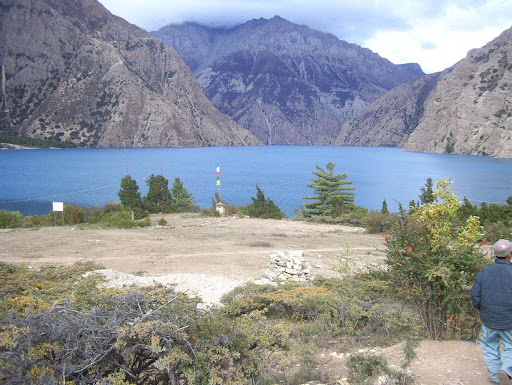
The trek begins in Kathmandu with a scenic flight to Nepalgunj, and onward to Juphal, the gateway to Dolpo. From here the trail leads deep into Shey Phoksundo National Park, passing the breathtaking turquoise waters of Phoksundo Lake (3,600m) before entering wilder terrain along the Phoksundo Khola gorges.
The route crosses towering mountain passes — Kang La (5,306m), Saldang La (4,785m), and Jeng La (5,100m) — each offering sweeping views of snow-capped peaks and high-altitude desert. Along the way, Shey Gompa, the 11th-century Crystal Monastery, offers a glimpse into the spiritual lives of Dolpo's Bon and Buddhist communities.
From Shey, the trail descends to villages such as Namgung Gonpa and Saldang, where centuries-old traditions of barley farming, yak herding, weaving, and seasonal trading still thrive, before climbing over Jeng La to Tokyu and Dho Tarap.
Due to its historical isolation, Upper Dolpo retains a raw, untouched charm — villages sit at altitudes over 4,300m, ancient traditions persist, and yak caravans, blue sheep, and even the elusive snow leopard can be encountered along the way.
The return journey passes through Serkam, Khani Gaon, and Tarakot before circling back to Dunai and Juphal. Whether captivated by Phoksundo Lake or the mystique of Shey Gompa, the Upper Dolpo Trek is a once-in-a-lifetime adventure into one of the Himalayas' last true wildernesses.
Itinerary
-
Day 1 Arrival in Kathmandu
Arrive at Tribhuvan International Airport and transfer to a 5-star hotel.
-
Day 2 Fly to Nepalgunj
A flight from Kathmandu to Nepalgunj, the lowland gateway city to western Nepal's restricted trekking regions.
-
Day 3 Spare Day in Nepalgunj
A buffer day held in reserve in case of Nepalgunj–Juphal flight delay due to weather. Free time to rest if unused.
-
Day 4 Fly to Juphal & Trek to Dunai
A short flight to Juphal, the gateway to Dolpo, followed by a downhill trek along the Thuli Bheri River to Dunai, the district headquarters.
-
Day 5 Trek to Ankhe
Trek through small villages and farmland into Shey Phoksundo National Park en route to Ankhe.
-
Day 6 Trek to Renje
Continue through forested trail and river crossings toward Renje.
-
Day 7 Trek to Phoksundo Lake
Arrive at the turquoise waters of Phoksundo Lake, Nepal's deepest lake, ringed by steep cliffs and waterfalls.
-
Day 8 Trek to Phoksundo Khola
Leave the lake behind and follow the Phoksundo Khola into narrower, wilder gorge terrain.
-
Day 9 Trek to Phoksundo Bhanjyang
Climb through a scenic meadow opening onto the Phoksundo Khola floodplains, gaining significant altitude toward Phoksundo Bhanjyang.
-
Day 10 Cross Kang La Pass to Shey Gompa
Cross the trek's highest point, Kang La Pass (5,306m), for sweeping mountain views, then descend to the sacred Crystal Monastery of Shey Gompa.
-
Day 11 Rest and Exploration Day at Shey Gompa
A rest and acclimatization day exploring the 11th-century Crystal Monastery and its surrounding sacred sites.
-
Day 12 Cross Saldang La Pass to Namgung Gonpa
Cross Saldang La Pass (4,785m) and descend into the wide, high-altitude Nubri-Tibetan landscape toward Namgung Gonpa.
-
Day 13 Trek to Saldang
Descend to Saldang, the largest village in Upper Dolpo, where barley farming and yak herding traditions still thrive.
-
Day 14 Trek to Sibu
Continue through remote high-desert terrain to the settlement of Sibu.
-
Day 15 Trek to the Foot of Jeng La
A shorter trekking day positioning for the Jeng La Pass crossing ahead.
-
Day 16 Cross Jeng La Pass to Tokyu Gaon
Cross Jeng La Pass (4,845m), strung with prayer flags, then descend to the village of Tokyu Gaon.
-
Day 17 Trek to Dho Tarap
Descend into the wide Tarap Valley to the culturally rich village of Dho Tarap, home to the Bon religion alongside Buddhist tradition.
-
Day 18 Trek to Serkam
Follow the Tarap Khola downstream through changing terrain to the settlement of Serkam.
-
Day 19 Trek to Khani Gaon
Continue downstream through pine-forested terrain to Khani Gaon.
-
Day 20 Trek to Tarakot
Trek above the Thuli Bheri River through green terraced fields to the village of Tarakot.
-
Day 21 Trek to Dunai
Follow the Bheri River back to Dunai, the district headquarters, closing the loop of the circuit.
-
Day 22 Trek to Juphal
A final short trekking day back to Juphal, ready for the return flight.
-
Day 23 Spare Day in Juphal
A buffer day held in reserve in case of Juphal–Kathmandu flight delay due to weather. Free time to rest if unused.
-
Day 24 Fly to Kathmandu via Nepalgunj
A connecting flight from Juphal to Kathmandu via Nepalgunj, returning to comfort after three weeks in the wilderness.
-
Day 25 Final Departure
Transfer to the international airport for departure.
Cost Details
What’s Included
- Porter/camping crew service, including insurance
- Full board camping meals (breakfast, lunch, dinner with tea/coffee) during the trek
- Tented camping equipment during the trek
- Airport pick-up and drop-off by private vehicle
- Guided city tour
- Nepalgunj–Juphal round-trip flight and ground transport
- All local taxes and entry fees
- Kathmandu–Nepalgunj round-trip flight and ground transport
- English-speaking licensed trekking guide, including salary, insurance, meals, and accommodation
- Upper Dolpo Restricted Area Permit (base two-week period), Lower Dolpo Restricted Area Permit (x2), and Shey Phoksundo National Park Entry Permit
- Hotel accommodation in Kathmandu with breakfast, 5-star standard, twin-sharing
What’s Excluded
- International airfare to and from Nepal
- Personal travel and trekking insurance
- Cold beverages and other personal expenses
- Nepal visa fee
- Tips for guide and porter
Highlights
- Three high passes: Kang La (5,306m), Saldang La (4,785m), and Jeng La (5,100m), each with sweeping Himalayan views.
- High-altitude desert scenery: Trans-Himalayan landscapes shifting between alpine valleys and stark high plateaus.
- Full camping expedition: A classic tented trek with almost no teahouse infrastructure, true wilderness immersion.
- Bon and Buddhist culture: Villages practicing centuries-old traditions of barley farming, yak herding, and weaving.
- Shey Gompa (Crystal Monastery): An 11th-century monastery and central sacred site for Tibetan Buddhism in Dolpo.
- Rare wildlife: A chance to spot blue sheep, yak caravans, and possibly the elusive snow leopard.
- Phoksundo Lake: A turquoise jewel surrounded by steep cliffs and cascading waterfalls in Shey Phoksundo National Park.
- Genuine restricted-area remoteness: One of Nepal's least-visited trekking regions, opened to outsiders only in 1989.
Why Choose This Trek
- One of the Himalaya's last true wildernesses: Among the most remote and least-visited restricted areas in Nepal.
- Deep cultural immersion: Villages where Bon and Tibetan Buddhist traditions remain largely unchanged for centuries.
- A genuine expedition-style trek: Full camping support in terrain with almost no teahouse infrastructure.
- Full support included: Guide, porter, all permits, and domestic flights arranged throughout.
- Comfortable bookend stays: 5-star Kathmandu hotel and a guided city tour before or after the trek.
- Multiple 5,000m+ passes: A serious high-altitude challenge without technical climbing skills.
Essential Information
Late spring to early autumn (May–October) is the best window, since Upper Dolpo lies in a high-altitude rain shadow and the passes can hold snow well into spring. Winter brings extreme cold and likely pass closure.
Rated strenuous. Around 3–7 hours of walking per day over 25 days, crossing three passes above 4,700m, with Kang La at 5,306m the highest point. Full camping trek with minimal teahouse infrastructure — good fitness, prior high-altitude trekking experience, and mental resilience for a long, remote expedition are strongly recommended.
Tented camping accommodation throughout most of the trek, as teahouse infrastructure is minimal to nonexistent in Upper Dolpo, bookended by a 5-star hotel in Kathmandu and hotels in Nepalgunj.
Full board camping meals included during the trek, prepared by the trekking crew — dal bhat, noodles, soups, and hot drinks are the trekking staples in this remote region. Vegetarian options can be arranged with advance notice.
Upper Dolpo is one of Nepal's most restricted trekking regions. A minimum of two trekkers and a licensed guide from a registered agency are mandatory — independent or solo trekking is not permitted here.
- Upper Dolpo Restricted Area Permit: Priced by the first-10-days block plus a daily rate thereafter; the most significant cost in this trek's permit package
- Lower Dolpo Restricted Area Permit (x2): Required twice, to enter and exit through Lower Dolpo en route to and from the upper region
- Shey Phoksundo National Park Entry Permit: Required for the section of the route within the national park
- Down jacket: Insulated jacket plus thermal base layers and warm gloves
- Rain/wind jacket: Windproof/waterproof outer layer and trekking pants
- Trekking poles: Recommended for long days and steep pass descents
- Trekking boots: Sturdy, broken-in boots with warm socks and gaiters for the high passes
- Sun protection: Sunglasses, sunscreen, and a reusable water bottle
- Four-season sleeping bag: Essential for camping at altitude; often provided by the trekking agency
- Headlamp: Essential for early starts on pass-crossing days and camp routines
- Personal kit: Personal medicines, altitude medication as advised by a doctor, and toiletries
Kang La Pass at 5,306m is the trek's highest point, with Saldang La and Jeng La also above 4,700m. Acclimatization matters above 3,000m — drink 3–4 liters of water daily, walk at a steady pace, and watch for headache, nausea, and dizziness as early symptoms of altitude sickness. Discuss altitude medication with a doctor before departure.