
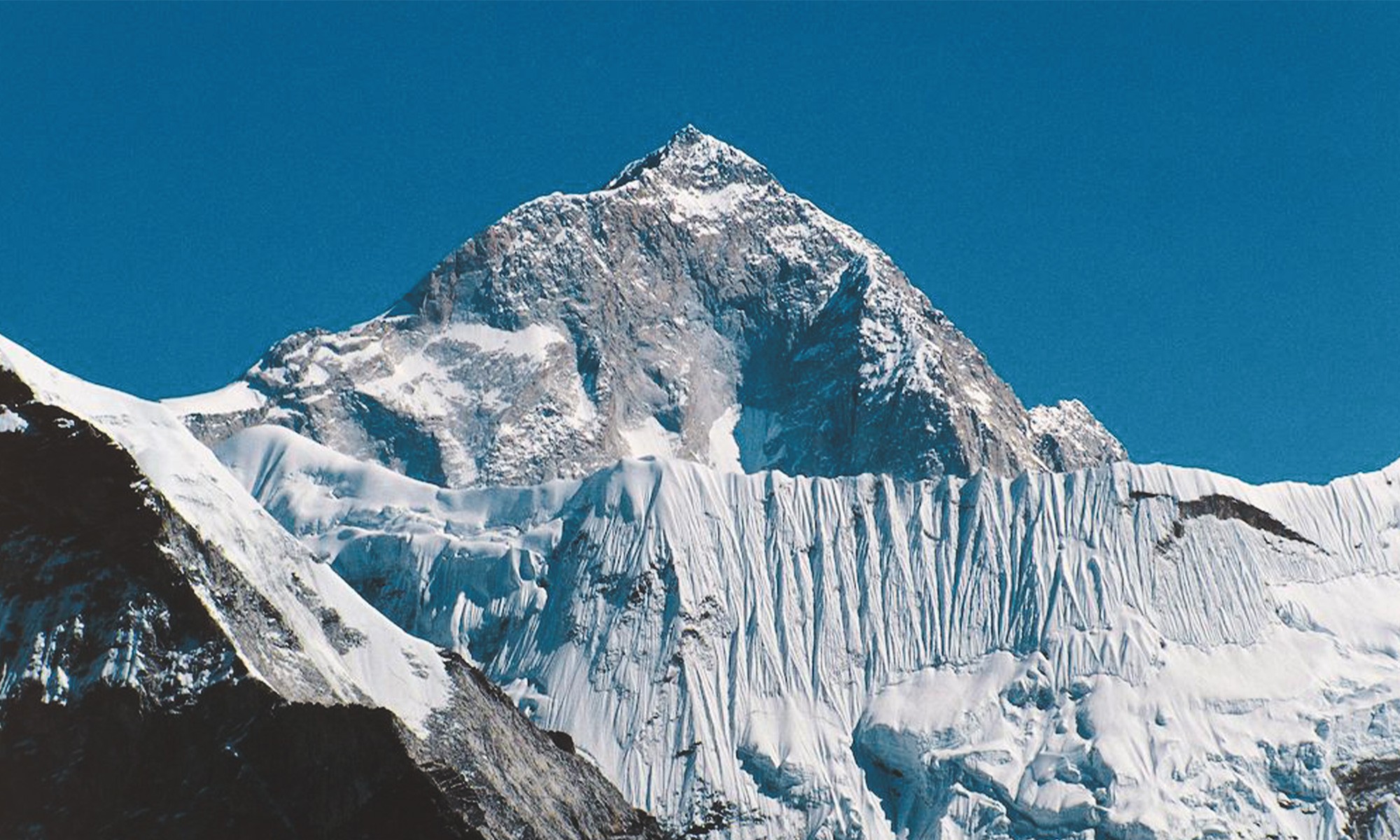
Makalu 8K Expedition
A 57-day expedition to Makalu (8,485m), the world's 5th-highest peak, via the classic approach
- Duration 57 Days
- Difficulty Strenuous
- Group Size 8 People
- Max Altitude 8485m
- Region Makalu
Overview
Makalu (8,485m) was first climbed by a French team in 1955, led by Lionel Terray and Jean Couzy, in an expedition where all nine climbing members reached the summit across three consecutive days — a feat unmatched in 1950s Himalayan mountaineering. The mountain was first mapped and photographed from the Tibet side in 1921 by the British Everest reconnaissance expedition.
Makalu was first attempted in 1954 by a US team, most of them from California, who walked the entire approach from Nepal near the Indian border at Biratnagar. That same autumn a French team attempted the peak; in the following spring, three teams of French climbers successfully summited on successive days.
In the decades since, Japanese climbers summited in 1970, a French team in 1971, a Yugoslav expedition in 1975, and Spanish and Czechoslovakian teams reached the summit area together. This expedition follows the classic route into the Barun Valley to Makalu Base Camp for a full-service, professionally guided attempt on the world's fifth-highest mountain.
Itinerary
-
Day 1 Arrival in Kathmandu
Arrive at Tribhuvan International Airport, welcomed by a Bonny Himalaya Treks representative, and transfer directly to a 5-star hotel on a bed & breakfast plan.
-
Day 2 Sightseeing & Expedition Preparation
A day of Kathmandu valley sightseeing combined with equipment checks and preparation for the Makalu expedition.
-
Day 3 Official Expedition Briefing
Complete official expedition paperwork and attend the mandatory briefing at the Ministry of Tourism.
-
Day 4 Fly to Tumlingtar & Trek to Khadbari
Fly from Kathmandu to Tumlingtar, gateway to the eastern Himalaya, then trek to the market town of Khadbari.
-
Day 5 Trek to Bhotebas
Trek through mid-hill villages and terraced farmland toward Bhotebas.
-
Day 6 Trek to Chichila
Continue through forested hill trail toward the village of Chichila.
-
Day 7 Trek to Num
Trek to Num, perched on a ridge overlooking the Arun Valley, the gateway to Makalu Barun National Park.
-
Day 8 Trek to Kuwapani
Descend steeply to the Arun River before climbing back up toward Kuwapani.
-
Day 9 Trek to Tashi Goan
Continue climbing steadily through forest toward the Sherpa settlement of Tashi Goan.
-
Day 10 Rest Day at Tashi Goan
An acclimatization day at Tashi Goan before the trail climbs into higher, more exposed terrain.
-
Day 11 Trek to Kauma
A significant climb into alpine terrain, gaining substantial altitude en route to Kauma.
-
Day 12 Trek to Dobato
Continue through high alpine terrain to Dobato, with increasing mountain views.
-
Day 13 Trek to Nebe Kharka
Trek higher into the Barun Valley, approaching the base of the Makalu massif.
-
Day 14 Trek to Sherson
Continue up the Barun Valley through increasingly stark, high-altitude terrain to Sherson.
-
Day 15 Trek to Makalu Base Camp
Arrive at Makalu Base Camp, the staging point for the climbing period ahead, with close views of Makalu, Everest, and Kangchenjunga.
-
Day 16 Climb to Makalu High Camp
The first acclimatization rotation onto the mountain, establishing and stocking High Camp ahead of the main climbing period.
-
Day 17 – 48 Climbing Period of Mt. Makalu
An extended climbing period allowing multiple rotations between Base Camp and the higher camps for acclimatization, rope-fixing, and load-carrying, culminating in a summit push on the Northwest Ridge via Makalu La when conditions allow.
-
Day 49 Trek from Base Camp to Yak Kharka
Begin the return trek, descending from Makalu Base Camp to Yak Kharka.
-
Day 50 Trek to Mumbuk
Continue the descent through the Barun Valley to Mumbuk.
-
Day 51 Trek to Tashi Goan
Descend further, retracing the approach route back toward Tashi Goan.
-
Day 52 Trek to Num
Continue descending through familiar terrain back to Num.
-
Day 53 Trek to Chichila
Retrace the approach trail down to Chichila.
-
Day 54 Trek to Tumlingtar
Final trekking day, descending back to Tumlingtar ahead of the return flight.
-
Day 55 Fly to Kathmandu
Fly from Tumlingtar back to Kathmandu and transfer to the hotel.
-
Day 56 Free Day & Farewell Dinner
A free day in Kathmandu valley, followed by an evening farewell dinner celebrating the expedition in traditional Nepali style.
-
Day 57 Final Departure
Transfer to the airport for your flight to your onward destination.
Cost Details
What’s Included
- 30 kg personal baggage allowance per member
- 4 nights 5-star hotel in Kathmandu on a Bed & Breakfast plan
- Three meals a day during trekking and at Base Camp, for both members and staff
- Makalu 8K Expedition Permit
- Government Liaison Officer, including full equipment, salary, and accommodation
- Daily wages, equipment, food, and clothing for all Nepali staff and porters
- Base camp staff, including a base camp cook and kitchen helper
- Comprehensive Base Camp services
- Oxygen cylinders, masks, and regulators, plus satellite phones or walkie-talkies if necessary
- Air cargo clearance for personal luggage of members and payment of government taxes
- Base camp lighting
- Farewell dinner at a standard restaurant in Kathmandu with Nepalese staff
- One climbing Sherpa per member, plus high camp cooking gas, pots, high-altitude tents, high food, and rope-fixing gear
- Full board, all-inclusive service throughout the expedition
- Stool shipment transfer and garbage deposit fees
- Porters per member up to Base Camp and their return journey
- Kathmandu–Tumlingtar round-trip domestic flight
- Medical and emergency rescue insurance for all staff
- North Face tents at Base Camp, foam mattresses, dining/kitchen/toilet/store tents, hot showers, tables, chairs, and cooking gear
What’s Excluded
- International airfare and arrival visa fee
- Personal insurance
- Rescue evacuation
- Summit bonus and tips for Sherpa and staff
Highlights
- Remote Barun Valley approach: A multi-day trek through Makalu Barun National Park, far less crowded than the Everest or Annapurna trails.
- Rich mountaineering history: Follow the route first pioneered by the historic 1955 French first-ascent expedition.
- Full climbing support: A dedicated climbing Sherpa per member, high camp services, and fixed rope support throughout.
- Comprehensive base camp services: North Face tents, hot showers, dining and kitchen tents, and full base camp lighting.
- Views of Everest and Kangchenjunga: Sweeping high-altitude panoramas across two of the world's other 8,000m giants.
- The world's fifth-highest peak: Summit Makalu at 8,485m, one of the most technically demanding 8,000m mountains.
Essential Information
Spring (April–May) is the primary season for Makalu, offering the most stable weather window for the summit push. Autumn (September–October) is also climbed but with a narrower weather window; winter and summer/monsoon attempts are rare and significantly more difficult.
Makalu is considered one of the more technically demanding 8,000m peaks, with sharp ridges, steep pitches, and significant exposure to high-altitude weather. Prior 8,000m or high-altitude mountaineering experience, technical rope skills, and excellent physical fitness are essential. The approach trek alone involves sustained multi-day trekking through remote, undeveloped terrain before base camp is even reached.
5-star hotel in Kathmandu on a bed & breakfast basis. Tented camping throughout the approach trek and at Base Camp, with North Face tents, foam mattresses, dining, kitchen, toilet, and store tents, plus hot showers and base camp lighting. High camps use high-altitude tents.
Full board, three meals a day, provided during the trek and at Base Camp for both members and staff. High camp food is provided during the climbing period, along with cooking gas and high-altitude cooking equipment.
As of the 2026 fee revision, the spring Makalu climbing royalty stands at approximately USD 3,000 per climber (up from the previous USD 1,800), with lower autumn and winter rates. A licensed guide and registered trekking/expedition agency are mandatory for all foreign climbers.
- Makalu Expedition (Climbing) Permit: Issued by the Department of Tourism, priced by season, per climber
- Garbage Deposit: Refundable environmental deposit for expeditions on peaks above 8,000m
- TIMS Card: Trekkers' Information Management System card for the approach trek
- Makalu Barun National Park Entry Permit: Required for the approach trek through the national park
- Personal kit: Personal medicines, sunscreen, sunglasses, and toiletries
- Climbing hardware: Harness, crampons, ice axe, ascender, and carabiners for fixed-rope sections
- Mountaineering boots: 8,000m-rated double or triple boots
- Sleeping bag: Extreme-cold rated bag for base camp and high camps
- Headlamp: Essential for the summit push and early camp-to-camp movements
- Oxygen mask and regulator: Provided by the expedition for high-altitude climbing
- High-altitude down suit: Full expedition-rated suit for summit push conditions
Makalu's summit at 8,485m is well within the 'death zone' where supplemental oxygen is standard practice. Acclimatization matters above 3,000m — the extended climbing period built into this itinerary allows multiple rotations between camps to acclimatize before the summit push. Watch for headache, nausea, and dizziness as early symptoms of altitude sickness, and take altitude medication only as advised by a doctor.