Baruntse 7K Expedition
A 30-day expedition combining a Mera Peak (6,461m) summit with the ascent of Baruntse (7,129m), crossing the technical Amphu Lapcha Pass on the return through the heart of the Everest region.
- Duration 30 Days
- Difficulty Strenuous
- Group Size 8 People
- Max Altitude 7129m
Overview
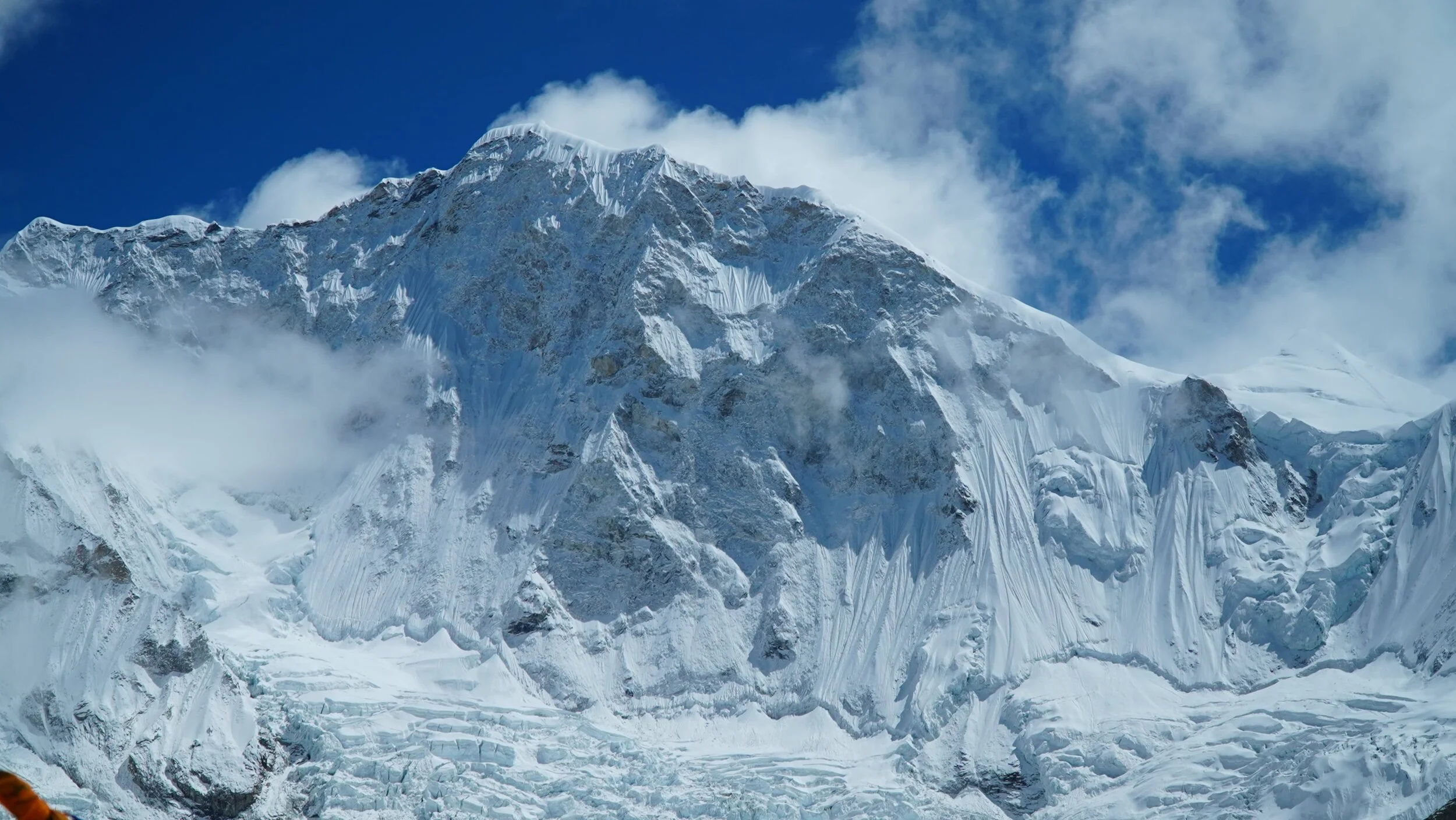
Baruntse (7,129m) is a snow peak at the heart of the Everest region, ringed by some of the world's most famous mountains — Everest, Lhotse, Makalu, Chamlang, Ama Dablam, and Mera Peak. It has one of the higher success rates of any 7,000m peak in Nepal on its standard route, and is widely regarded as one of the best preparation climbs for future 8,000m expeditions.
The approach follows the classic Mera Peak trekking route up to Mera La before continuing to Baruntse Base Camp (5,250m). The standard Southeast Ridge route is not technically demanding for a 7,000m peak — mostly straightforward climbing on snow and ice, with some overhanging sections — and is typically climbed via two camps above Base Camp: Camp I (5,700m), set just below the East Col, and Camp II (6,420m) on the southeast ridge.
Baruntse was first climbed on May 30, 1954, by Colin Todd and Geoff Harrow of a New Zealand expedition led by Sir Edmund Hillary. The upper Southeast Ridge includes a section of roughly 50-degree slopes with a prominent ice cliff, carrying real avalanche risk, which is why most successful ascents happen in spring, though autumn summits are achievable too. This itinerary builds in gradual ascent and proper acclimatization, including a Mera Peak summit en route, ahead of the Baruntse climb itself.
Itinerary
-
Day 1 Arrival in Kathmandu
Arrive at Tribhuvan International Airport, welcomed by a Bonny Himalaya Treks representative, and transfer directly to a 5-star hotel on a bed & breakfast plan.
-
Day 2 Orientation Day in Kathmandu
A day for expedition orientation, equipment checks, and final preparation.
-
Day 3 Fly to Lukla
A short, scenic flight from Kathmandu to Lukla, gateway to the Everest region.
-
Day 4 Trek to Chutanga
Climb steadily out of Lukla toward Chutanga, leaving the main Everest trail behind.
-
Day 5 Cross Zatrwa La Pass to Thuli Kharka
Cross the Zatrwa La Pass (4,610m) for sweeping views, then descend to Thuli Kharka.
-
Day 6 Trek to Mosom Kharka
Descend into the remote Hinku Valley toward Mosom Kharka.
-
Day 7 Trek to Thangnak
Continue up the Hinku Valley, with growing views of Mera Peak, to Thangnak.
-
Day 8 Acclimatization Day at Thangnak
A rest day to explore the surrounding area and acclimatize before continuing higher.
-
Day 9 Trek to Khare
Climb higher into the Hinku Valley to Khare, the last settlement before Mera Peak.
-
Day 10 Rest Day for Climbing Preparation
A rest day at Khare for equipment checks and final preparation ahead of the Mera Peak climb.
-
Day 11 Trek via Mera La to Mera High Camp
Cross Mera La (5,350m) and continue to Mera High Camp, the staging point for the summit push.
-
Day 12 Summit Mera Peak & Descend to Khongma Danda
An early start to summit Mera Peak (6,461m) for panoramic views including Everest, Lhotse, and Makalu, before descending to Khongma Danda.
-
Day 13 Rest Day at Khongma Danda
A rest day to recover after the Mera Peak summit before continuing toward Baruntse.
-
Day 14 Trek to Seto Pokhari
Trek across remote, high-altitude terrain toward Seto Pokhari.
-
Day 15 Trek to Baruntse Base Camp
Arrive at Baruntse Base Camp (5,400m), the staging point for the climbing period ahead.
-
Day 16 Rest & Acclimatization Day at Base Camp
A rest day at Baruntse Base Camp to recover and acclimatize.
-
Day 17 Climbing Preparation Day at Base Camp
Final equipment checks and route briefing ahead of the climb to Camp I.
-
Day 18 Climb to Camp I
Climb to Camp I (6,143m), set just below the East Col.
-
Day 19 Climb to Camp II
Continue up the southeast ridge to Camp II (6,752m), the staging point for the summit push.
-
Day 20 Weather Contingency Day
A reserve day at Camp II in case poor weather delays the summit attempt.
-
Day 21 Summit Baruntse & Descend to Base Camp
An early start to summit Baruntse (7,129m), crossing the demanding upper ridge with its steep ice section, before descending all the way back to Base Camp.
-
Day 22 Trek to Amphu Lapcha Base Camp
Begin the return journey toward Amphu Lapcha Base Camp, staging for the technical pass crossing ahead.
-
Day 23 Cross Amphu Lapcha Pass to Imja Tsho Base Camp
A technical, roped crossing of the Amphu Lapcha Pass (5,845m), descending into the Khumbu at Imja Tsho Base Camp.
-
Day 24 Trek to Dingboche
Rejoin the classic Khumbu trail, descending to the village of Dingboche.
-
Day 25 Trek to Tengboche
Continue down through Pangboche to Tengboche, home to the region's most active Buddhist monastery.
-
Day 26 Trek to Namche Bazaar
Descend through forest back to Namche Bazaar, the main trading hub of the Everest region.
-
Day 27 Trek to Lukla
A final trekking day back down the Dudh Koshi valley to Lukla.
-
Day 28 Fly back to Kathmandu
A short, scenic flight from Lukla back to Kathmandu.
-
Day 29 Free Day & Farewell Dinner
A free day in Kathmandu, followed by an evening farewell dinner in a typical Nepali restaurant.
-
Day 30 Final Departure
Transfer to the airport for your flight to your onward destination.
Cost Details
What’s Included
- 4 nights 5-star hotel in Kathmandu on a Bed & Breakfast plan
- Comprehensive Base Camp services
- Farewell dinner at a standard restaurant in Kathmandu with Nepalese staff
- Daily wages, equipment, food, and clothing for all Nepali staff and porters
- Medical and emergency rescue insurance for all staff
- Air cargo clearance for personal luggage of members and payment of government taxes
- North Face tents at Base Camp, foam mattresses, dining/kitchen/toilet/store tents, hot showers, tables, chairs, and cooking gear
- Baruntse Expedition Permit
- 30 kg personal baggage allowance per member
- Stool shipment transfer and garbage deposit fees
- Kathmandu–Lukla round-trip domestic flight
- Base camp lighting
- One climbing Sherpa per member, plus high camp cooking gas, pots, high-altitude tents, and rope-fixing gear
- Base camp staff, including a base camp cook and kitchen helper
- Government Liaison Officer, including full equipment, salary, and accommodation
- Porters per member up to Base Camp and their return journey
- Three meals a day during trekking and at Base Camp, for both members and staff
- Oxygen cylinders, masks, and regulators, plus satellite phones or walkie-talkies as needed
What’s Excluded
- International airfare and arrival visa fee
- Summit bonus and tips for Sherpa and staff
- Rescue evacuation
- Personal insurance
Highlights
- Views of Everest, Lhotse, and Makalu: Summit and camp panoramas across some of the world's most famous 8,000m peaks.
- A genuine 8,000m preparation climb: Combines two summits, glacier travel, and a technical pass crossing — serious training for future high-altitude expeditions.
- Full climbing support: A dedicated climbing Sherpa per member, fixed ropes, and comprehensive base camp services.
- Two summits, one expedition: Summit Mera Peak (6,461m) as acclimatization before attempting Baruntse itself (7,129m).
- A high success-rate 7,000m peak: Baruntse's standard Southeast Ridge route has one of the better completion rates among Nepal's 7,000m objectives.
- Amphu Lapcha Pass: A technical high pass crossing (5,845m) on the return route, linking back into the Khumbu.
Essential Information
Spring (March–May) offers the most stable conditions and the highest summit success rate on Baruntse's upper Southeast Ridge. Autumn (September–November) is also climbed, though the weather window is narrower and success rates somewhat lower.
This is a technically varied and demanding itinerary: it includes a full Mera Peak (6,461m) summit as acclimatization, glacier travel and fixed-rope climbing on Baruntse's upper Southeast Ridge (including a roughly 50-degree ice section), and a technical crossing of the Amphu Lapcha Pass (5,845m) on the return leg. Prior experience on a 6,000m technical peak (such as Island Peak, Mera Peak, or Lobuche East), and comfort with crampons, ice axes, and fixed ropes, is strongly recommended before attempting this expedition.
5-star hotel in Kathmandu on a bed & breakfast basis. Lodge accommodation around Lukla and on the return through Dingboche, Tengboche, and Namche, with tented camping throughout the remote sections between Chutanga and the descent from Amphu Lapcha.
Full board, three meals a day, provided during the trek and at Base Camp for both members and staff. High camp food and cooking equipment are provided during the climbing period.
Climbers should ideally have prior experience on a 6,000m technical peak before attempting Baruntse — trekking agencies typically review climbing history as part of the permit application.
- Khumbu Pasang Lhamu Rural Municipality Entry Permit: Required for the return route through the Khumbu
- Mera Peak Trekking Permit: Separate NMA trekking-peak permit required for the Mera Peak summit en route
- Makalu Barun National Park Entry Permit: Required for the approach through the Hinku and Hongu valleys
- TIMS Card: Trekkers' Information Management System card
- Baruntse Expedition (Climbing) Permit: Issued by the Department of Tourism / NMA, priced by season, per climber
- Headlamp: Essential for early starts on both summit push days
- Personal kit: Personal medicines, altitude medication as advised by a doctor, sunscreen, and toiletries
- Climbing hardware: Harness, crampons, ice axe, ascender, and carabiners for fixed-rope sections and the Amphu Lapcha crossing
- Trekking poles: Recommended for the long approach and technical descents
- Sleeping bag: Extreme-cold rated bag for base camp and higher camps
- Mountaineering boots: Double boots suitable for both the Mera Peak and Baruntse summit attempts
- High-altitude down suit or layered system: Insulated protection for base camp and higher camps
The expedition includes two major altitude milestones — the Mera Peak summit at 6,461m and the Baruntse summit at 7,129m — plus the Amphu Lapcha Pass at 5,845m on the return. Acclimatization matters above 3,000m — the extended itinerary allows multiple rest and rotation days before each major push. Watch for headache, nausea, and dizziness as early symptoms of altitude sickness, and take altitude medication only as advised by a doctor.