Everest Base Camp Trek
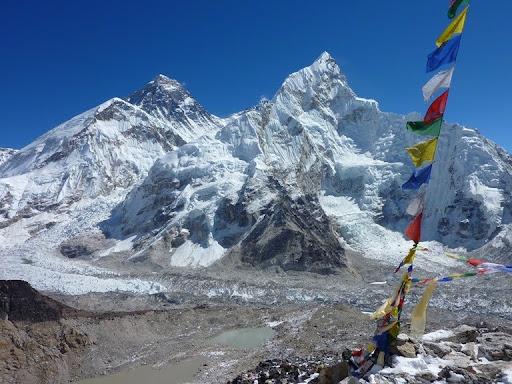
A classic 14-day trek through Sagarmatha National Park to the base of the world's highest mountain, with a sunrise climb of Kala Patthar (5,555m) for the closest walking-trail view of Everest.
- Duration 14 Days
- Difficulty Strenuous
- Group Size 12 People
- Max Altitude 5555m
- Region Everest
Overview
The Everest Base Camp Trek combines well-maintained Himalayan trails with the raw scale of the world's highest mountains and the warmth of Sherpa culture. The route begins with a flight from Kathmandu to Lukla (or, in busier months, a drive to Manthali/Ramechhap followed by a shorter flight), then follows the Dudh Koshi River through Sagarmatha National Park to Namche Bazaar, the region's main trading hub and first acclimatization stop. From Namche the trail climbs past Tengboche Monastery, the highest monastery in the world, to Dingboche and Lobuche, with views of Lhotse, Nuptse, Makalu, Cho Oyu, and Ama Dablam along the way. The trek follows the Khumbu Glacier to Everest Base Camp itself, and a pre-dawn climb of Kala Patthar the next morning delivers the trek's best sunrise view of Everest before the return journey retraces the route to Lukla.
Itinerary
-
Day 1 Arrival in Kathmandu
Arrive at Tribhuvan International Airport and transfer to a 5-star hotel. Evening trek briefing.
-
Day 2 Fly to Lukla & Trek to Phakding
Fly from Kathmandu to Lukla (35 minutes), or in peak months drive to Manthali/Ramechhap and take a shorter flight, then trek to Phakding along the Dudh Koshi River.
-
Day 3 Trek to Namche Bazaar
Cross the Dudh Koshi on suspension bridges and enter Sagarmatha National Park before a steep climb to Namche Bazaar, the region's main trading hub.
-
Day 4 Acclimatization Day at Namche
Rest day with an optional hike to Hotel Everest View for one of the first close-up sightings of Mount Everest.
-
Day 5 Trek to Tengboche
A scenic balcony trail leads to Tengboche, home to the highest monastery in the world and views of Ama Dablam.
-
Day 6 Trek to Dingboche
Descend through Deboche forest, cross the Imja Khola, and climb via Pangboche into open alpine terrain at Dingboche.
-
Day 7 Acclimatization Day at Dingboche
Rest day with an optional hike up Nangkartshang Peak for panoramic views of Makalu, Lhotse, and the Dingboche valley.
-
Day 8 Trek to Lobuche
Cross barren valleys and Khumbu Glacier moraine, climbing steeply through Thukla Pass past the climbers' memorials to Lobuche.
-
Day 9 Trek to Everest Base Camp & Gorak Shep
Follow the Khumbu Glacier to Everest Base Camp at 5,364m, then return to Gorak Shep for the night.
-
Day 10 Kala Patthar Sunrise & Descend to Pheriche
Pre-dawn climb to Kala Patthar (5,555m) for sunrise views of Everest, then descend through Gorak Shep to Pheriche.
-
Day 11 Trek to Namche Bazaar
Retrace the route through Pangboche, Tengboche, and Kyangjuma back down to Namche Bazaar.
-
Day 12 Trek to Lukla
Final descent down the Dudh Koshi valley through Jorsalle, Monjo, and Phakding back to Lukla.
-
Day 13 Fly back to Kathmandu
Fly from Lukla to Kathmandu (35 minutes), or via Manthali/Ramechhap plus a shared vehicle drive in peak months. Overnight at a 3-star hotel.
-
Day 14 Final Departure
Transfer to the airport for departure.
Cost Details
What’s Included
- Guided city tour of Kathmandu and Bhaktapur
- Airport pick-up and drop-off by private vehicle
- Teahouse accommodation during the trek
- Kathmandu–Lukla–Kathmandu flights (or Manthali/Ramechhap routing in peak months)
- All local taxes and entry fees
- Full board meals (breakfast, lunch, dinner with tea/coffee) during the trek
- Sagarmatha National Park Entry Permit and Khumbu Pasang Lhamu Rural Municipality Entry Permit
- Porter service, including insurance
- Hotel accommodation in Kathmandu with breakfast, 5-star standard, twin-sharing
- English-speaking trekking guide, including salary, insurance, meals, and accommodation
What’s Excluded
- Cold beverages and other personal/extra expenses
- International airfare to and from Nepal
- Tips for guide, porter, and driver
- Personal travel and trekking insurance
- Nepal visa fee
Highlights
- Tengboche Monastery: Visit the highest monastery in the world, framed by Ama Dablam.
- Lukla flight: One of the world's most dramatic mountain airstrip approaches.
- Kala Patthar sunrise: Climb to 5,555m for the closest trailside panorama of Mount Everest.
- 8,000m giants: Views of Lhotse, Makalu, and Cho Oyu alongside Everest itself.
- Sherpa culture: Pass through Namche Bazaar and Khumjung, the cultural heart of the Sherpa homeland.
- Sagarmatha National Park: A UNESCO World Heritage Site home to Himalayan tahr, pheasants, and rhododendron forest.
- Khumbu Glacier: Walk beside the world's highest and deepest glacier system.
- Everest Base Camp: Stand at the foot of the world's highest mountain beside the Khumbu Glacier.
Why Choose This Trek
- Well-developed teahouse route: Reliable lodging, food, and even bakeries and Wi-Fi despite the remote setting.
- Comfortable bookend stays: 5-star Kathmandu hotel and a guided Kathmandu/Bhaktapur city tour before the trek.
- The classic Himalayan trek: Reach the foot of the world's highest mountain without technical climbing skills.
- Rich Sherpa culture: Monasteries, prayer walls, and mountain hospitality throughout the Khumbu.
- Full support included: Guide, porter, permits, and flights arranged throughout.
- Two dedicated acclimatization days: Rest days at Namche and Dingboche reduce altitude sickness risk.
Essential Information
Spring (March–May) and autumn (September–November) are the most popular seasons, with the clearest mountain views and stable Lukla flights. In these peak months, flights often route via a drive to Manthali/Ramechhap plus a short hop to Lukla to reduce Kathmandu air traffic delays. Winter is cold but quiet; monsoon brings cloud cover and flight disruption.
Rated strenuous. Around 5–8 hours of walking per day, reaching 5,364m at Everest Base Camp and 5,555m at Kala Patthar, the trek's highest point. No technical climbing skills are required, but good fitness and prior high-altitude experience are recommended.
Teahouse/lodge accommodation on a shared, twin-sharing basis throughout the trek, with hot showers and Wi-Fi available at extra cost in most villages, bookended by a 5-star hotel in Kathmandu before the trek and a 3-star hotel after.
Full board meals included during the trek — dal bhat, noodles, soups, momos, and pasta are common, with bakery items available in Namche and Tengboche. Vegetarian options are widely available at teahouses.
- Sagarmatha National Park Entry Permit: Required to enter the national park, checked at the Monjo gate
- Khumbu Pasang Lhamu Rural Municipality Entry Permit: Local government permit, obtained in Lukla or Monjo
- Down jacket: Insulated jacket plus thermal base layers and warm gloves
- Trekking boots: Sturdy, broken-in boots with warm socks
- Personal kit: Personal medicines, altitude medication as advised by a doctor, and toiletries
- Sleeping bag: Four-season rated bag, often provided by the trekking agency
- Rain/wind jacket: Windproof/waterproof outer layer and trekking pants
- Headlamp: Essential for the pre-dawn Kala Patthar climb
- Sun protection: Sunglasses, sunscreen, and a reusable water bottle
Kala Patthar at 5,555m is the trek's highest point. Acclimatization matters above 3,000m — drink 3–4 liters of water daily, walk at a steady pace, and watch for headache, nausea, and dizziness as early symptoms of altitude sickness. Discuss altitude medication with a doctor before departure.